
Siding · Homeowner guide
Vinyl Siding vs. Fiber Cement Siding: Which Is Better for New Jersey Homes in 2026?
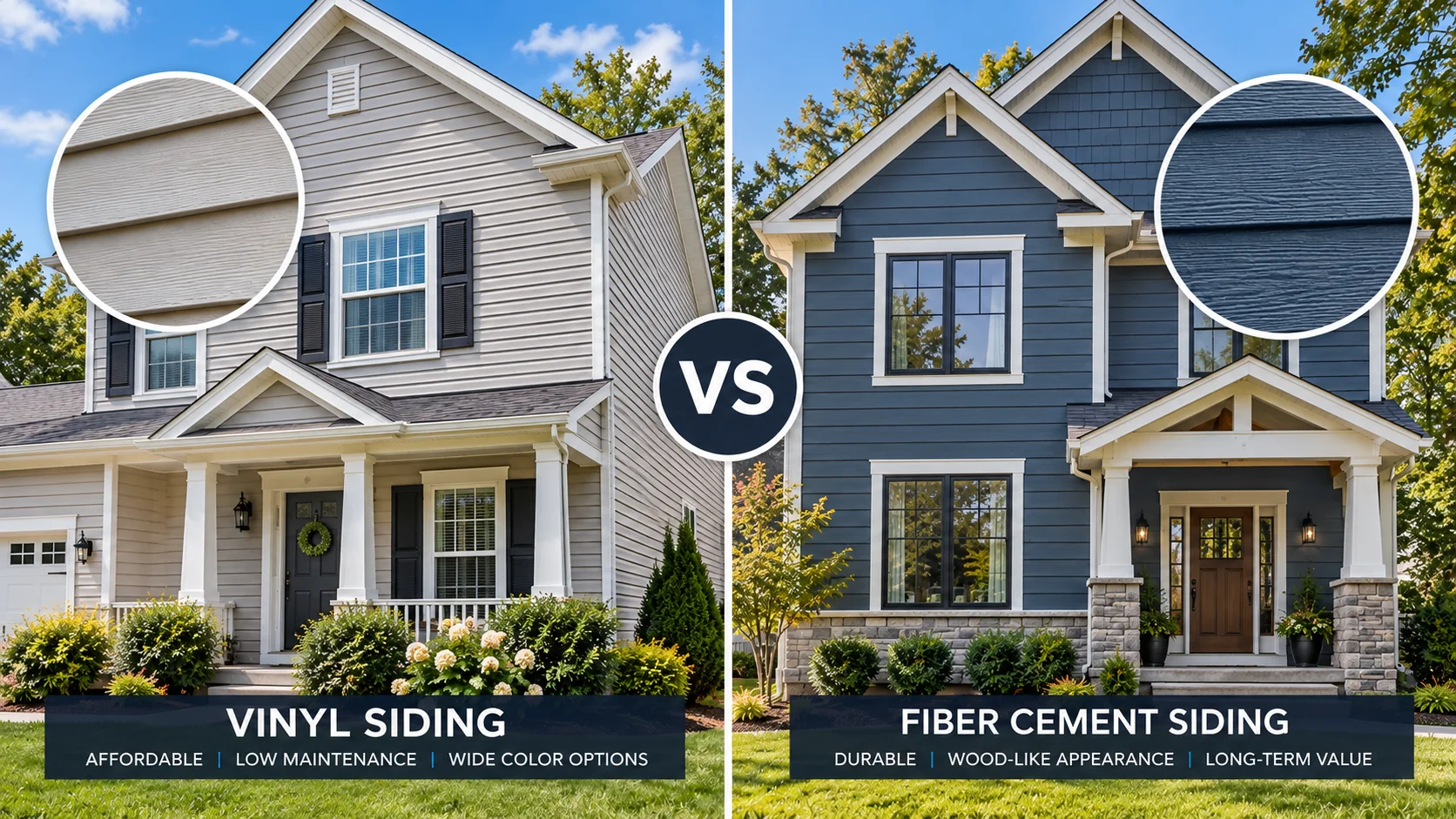
Choosing between vinyl siding and fiber cement siding is one of the most important decisions New Jersey homeowners face when planning an exterior renovation.
Both materials can transform your home’s appearance, protect underlying exterior wall components, and provide years of service. However, they differ in installation costs, maintenance requirements, durability, fire performance, and overall appearance.
So, which siding material is better for your New Jersey home in 2026?
The short answer: Vinyl siding is generally the more affordable, low-maintenance option, while fiber cement siding offers a solid, wood-like appearance, dimensional stability, and noncombustible material options.
Neither material is automatically better for every property. The right choice depends on your budget, architectural preferences, local weather exposure, and long-term priorities.
At Remodeling & Quality Corp., we believe homeowners should understand their options before investing in exterior improvements.
This guide compares vinyl and fiber cement siding to help New Jersey homeowners make informed decisions when planning a siding installation or replacement project.
What Is the Difference Between Vinyl Siding and Fiber Cement Siding?
The main difference between these two exterior cladding materials is their composition and performance characteristics.
What Is Vinyl Siding?
Vinyl siding is an exterior cladding material primarily manufactured from polyvinyl chloride (PVC).
It is widely used on American homes because it is lightweight, relatively affordable, and available in numerous colors and architectural styles.
Popular vinyl siding options include:
- Traditional horizontal lap siding.
- Dutch lap siding.
- Board-and-batten styles.
- Vertical vinyl panels.
- Shake and shingle-style siding.
- Insulated vinyl siding products.
Most conventional vinyl siding does not require routine repainting because its color is incorporated into the material.
However, vinyl siding expands and contracts as temperatures change, making proper fastening and installation clearances especially important.
What Is Fiber Cement Siding?
Fiber cement siding is a composite exterior cladding material typically manufactured using cement, cellulose fibers, sand, and other ingredients.
It is designed to provide durable exterior cladding while offering various architectural finishes.
Common fiber cement styles include:
- Horizontal lap siding.
- Board-and-batten designs.
- Vertical siding panels.
- Shingle-style siding.
- Smooth contemporary finishes.
- Wood-grain textures.
Fiber cement siding is heavier than vinyl and generally requires different cutting, handling, fastening, and installation procedures.
Certain fiber cement siding products are classified as noncombustible under recognized testing standards.
Vinyl Siding vs. Fiber Cement: Quick Comparison
Here is a side-by-side comparison of the two materials.
| Feature | Vinyl Siding | Fiber Cement Siding |
|---|---|---|
| Initial cost | Generally lower | Generally higher |
| Material composition | PVC-based | Cement and fiber composite |
| Installation | Lightweight | Heavier, more labor-intensive |
| Maintenance | Generally low | Low to moderate |
| Painting | Usually unnecessary | May require repainting |
| Impact damage | Can crack or dent | Can chip or crack |
| Temperature movement | Greater expansion and contraction | Generally less thermal movement |
| Fire characteristics | Combustible | Certain products are noncombustible |
| Design options | Many colors and profiles | Various textures and finishes |
| Weather resistance | Product- and installation-dependent | Product- and installation-dependent |
Key takeaway: Vinyl siding is attractive for homeowners focused on upfront affordability, while fiber cement may appeal to those prioritizing particular architectural finishes and material characteristics.
How Much Does Vinyl Siding vs. Fiber Cement Cost in New Jersey in 2026?
Cost is one of the most important factors when comparing siding materials.
Vinyl siding generally has a lower initial installation cost than fiber cement siding.
However, the final price depends on home size, material selection, existing wall conditions, and installation complexity.
Regional Siding Replacement Cost Comparison
The 2025 Cost vs. Value Report, published by the Journal of Light Construction, provides the following regional reference figures for the New York, NY market:
| Siding Replacement Project | Published Average Project Cost |
|---|---|
| Vinyl Siding Replacement | $21,223 |
| Fiber Cement Siding Replacement | $25,708 |
Source: 2025 Cost vs. Value Report — New York, NY
These figures are historical regional benchmarks, not verified New Jersey averages for 2026 or guaranteed pricing from Remodeling & Quality Corp.
Actual installation costs can be significantly higher or lower.
What Factors Affect Siding Installation Costs?
Several factors influence the total investment:
- Exterior wall square footage: Material quantities are based on the areas being covered rather than the home’s interior floor space alone.
- Material selection: Manufacturer, profile, thickness, texture, and finish affect pricing.
- Removal of existing siding: Old materials may need to be removed and properly disposed of.
- Wall condition: Damaged sheathing, flashing, or weather-resistive barriers may require repairs.
- Home design: Multiple stories, gables, corners, and complex architectural details may increase labor requirements.
- Trim and finishing: Windows, doors, soffits, and decorative details affect the installation scope.
- Accessibility: Difficult access may require additional equipment or preparation.
For a more detailed breakdown, read our guide: How Much Does Siding Replacement Cost in New Jersey in 2026?.
The most reliable way to understand your siding replacement cost is to request a project-specific estimate based on your property’s actual conditions.
Which Siding Is Better for New Jersey Weather?
New Jersey experiences cold winters, hot summers, heavy rainfall, strong winds, and occasional severe storms.
Both vinyl siding and fiber cement siding can perform well under these conditions when properly selected and installed.
Vinyl Siding in New Jersey Weather
Vinyl siding is designed for exterior exposure but must be installed correctly to accommodate temperature changes.
Important considerations include:
- Expansion and contraction during temperature fluctuations.
- Increased brittleness in some products during cold weather.
- Potential impact damage from debris.
- Warping caused by concentrated heat exposure.
- Wind resistance that varies by product and installation method.
Choosing an appropriately rated product and following manufacturer instructions are essential for long-term performance.
Fiber Cement Siding in New Jersey Weather
Fiber cement siding provides a different set of material characteristics.
Potential advantages include:
- Dimensional stability compared with vinyl.
- Resistance to many common pests.
- Noncombustible characteristics in qualifying products.
- A wide selection of durable exterior finishes.
- A solid, wood-like architectural appearance.
However, fiber cement still requires proper installation, flashing, clearances, sealing, and maintenance.
Improper installation or prolonged moisture exposure can create problems regardless of the product’s reputation.
Which Material Performs Better?
Neither siding material is universally superior in every weather condition.
Homeowners should compare manufacturer specifications, applicable wind ratings, installation requirements, and warranties.
The performance of the entire exterior wall assembly matters as much as the siding itself.
Which Siding Requires Less Maintenance?
Maintenance is an important consideration when comparing vinyl and fiber cement siding.
Vinyl Siding Maintenance
Vinyl siding is generally considered a low-maintenance material.
Routine care may include:
- Periodic cleaning to remove dirt and debris.
- Inspecting panels after severe storms.
- Checking for cracks or loose sections.
- Addressing damaged trim.
- Keeping landscaping from rubbing against the siding.
Most standard vinyl siding products do not require regular painting.
Fiber Cement Siding Maintenance
Fiber cement siding can also provide relatively low maintenance, although requirements vary by product and finish.
Common maintenance tasks include:
- Periodic cleaning.
- Inspecting painted or factory-finished surfaces.
- Checking sealant and flashing details where applicable.
- Repairing chips or damaged sections.
- Repainting when necessary under manufacturer recommendations.
Which Is Easier to Maintain?
For homeowners seeking minimal repainting requirements, standard vinyl siding generally has an advantage.
Fiber cement siding may need more attention to exterior finishes over time, depending on the selected product.
Always review the manufacturer’s recommended maintenance procedures.
Does Vinyl or Fiber Cement Siding Last Longer?
Both vinyl and fiber cement siding can provide decades of service when correctly installed and maintained.
However, neither material has one guaranteed lifespan that applies to every property.
Factors affecting longevity include:
- Product quality.
- Installation methods.
- Weather exposure.
- Maintenance.
- Physical impacts.
- Moisture management.
- Condition of the underlying wall assembly.
A high-quality vinyl siding product installed correctly may outperform a poorly installed fiber cement system.
Likewise, properly installed fiber cement siding can provide reliable long-term performance.
Installation quality and product selection are critical factors in determining how well either material performs over time.
Is Fiber Cement Siding Worth the Extra Cost?
For some New Jersey homeowners, fiber cement siding may justify a higher upfront investment.
It may be worth considering if you prioritize:
- A solid, wood-like exterior appearance.
- Specific architectural finishes.
- Certain fire-performance characteristics.
- Dimensional stability.
- Compatibility with your desired exterior design.
However, fiber cement is not automatically the best financial choice for every home.
If your priorities are lower initial cost, reduced repainting, and a broad selection of colors, vinyl siding may be a more practical solution.
Instead of assuming one material is always better, compare the complete installation cost, product warranty, expected maintenance, and architectural appearance.
Does Vinyl or Fiber Cement Siding Improve Energy Efficiency?
Homeowners often ask which siding material provides better insulation.
Neither conventional vinyl siding nor standard fiber cement siding should be considered a substitute for a properly insulated and air-sealed exterior wall.
Energy performance depends on the complete wall assembly, including:
- Insulation.
- Exterior sheathing.
- Air sealing.
- Windows and doors.
- Thermal bridging.
- Weather-resistive barriers.
- Installation quality.
Certain insulated siding products may provide additional thermal resistance, but performance varies by system.
A siding replacement project can also create an opportunity to evaluate exterior insulation and air-sealing improvements.
However, installing new siding alone does not guarantee lower energy bills.
Which Siding Looks Better on a New Jersey Home?
Appearance is subjective, and both materials offer attractive design options.
Popular Vinyl Siding Styles
Vinyl siding is available in traditional and contemporary designs.
Popular exterior combinations include:
- Light gray siding with white trim.
- Beige or cream horizontal panels.
- Dark blue exterior finishes.
- Vertical board-and-batten accents.
- Shake-style gable details.
Its versatility makes it suitable for many suburban architectural styles.
Popular Fiber Cement Siding Styles
Fiber cement is frequently selected for homes seeking a wood-like or contemporary appearance.
Design options include:
- Traditional lap siding.
- Smooth modern panels.
- Board-and-batten elevations.
- Textured wood-grain finishes.
- Contrasting architectural colors.
Your choice should complement your home’s architectural style, exterior details, and preferred maintenance requirements.
Can New Siding Increase Your Home’s Value?
Replacing old or deteriorated siding may improve curb appeal and make a property more attractive to potential buyers.
However, the financial return depends on factors such as local market conditions, property value, material choice, and project cost.
The 2025 Cost vs. Value Report estimated the following cost-recovery percentages for modeled siding replacement projects in the New York, NY market:
| Project | Estimated Cost Recouped |
|---|---|
| Vinyl Siding Replacement | 95.1% |
| Fiber Cement Siding Replacement | 97.1% |
These figures are regional modeled estimates, not guaranteed returns for individual New Jersey properties.
Beyond resale considerations, new siding can improve exterior appearance and provide an opportunity to address deteriorated wall materials.
When Should You Replace Your Existing Siding?
Before choosing a new siding material, homeowners should determine whether their existing siding needs replacement.
Common warning signs include:
- Extensive cracking or broken panels.
- Persistent warping or buckling.
- Widespread deterioration.
- Loose or missing sections.
- Recurring moisture-related problems.
- Frequent repairs.
- Major exterior renovation plans.
Not every damaged panel requires complete replacement.
For localized damage, replacing individual panels may be appropriate.
Explore our related guides:
If you’re dealing with isolated damage, learn more about our siding repair services in New Jersey.
How to Choose the Right Siding Contractor in New Jersey
The quality of your siding installation plays an important role in its long-term performance.
Before hiring a contractor, consider the following questions.
Is the Contractor Properly Registered?
Verify applicable New Jersey home improvement contractor registration and other relevant legal requirements.
Does the Contractor Have Experience With Your Preferred Material?
Vinyl siding and fiber cement siding have different installation requirements.
Ask whether the contractor has experience with the selected material and manufacturer.
Will You Receive a Detailed Written Estimate?
A useful estimate should identify materials, labor, preparation, removal, finishing requirements, and relevant project conditions.
How Will Moisture Protection Be Addressed?
Proper flashing and moisture management are essential to exterior wall performance.
Ask how existing materials will be evaluated and how unexpected damage will be handled.
What Warranties Are Included?
Understand the difference between manufacturer warranties and any workmanship coverage.
Can You Review Previous Projects?
Examples of completed work can help you evaluate installation quality, design choices, and attention to detail.
Which Siding Should You Choose for Your New Jersey Home in 2026?
The best siding material depends on your home’s needs and renovation priorities.
Choose vinyl siding when:
- Lower upfront cost is a primary concern.
- You prefer minimal repainting.
- You want a broad selection of colors and profiles.
- You prefer a lightweight exterior cladding material.
Consider fiber cement siding when:
- You prefer its solid, wood-like appearance.
- You’re comfortable with a higher potential upfront cost.
- Specific fire-performance characteristics are important.
- Its finish and maintenance requirements match your expectations.
Neither option should be selected based on price alone.
A well-planned siding project considers appearance, material performance, maintenance, moisture protection, and long-term value.
Explore our professional siding replacement in New Jersey or siding installation services to discuss material options for your home.
Professional Siding Services in New Jersey
Whether you’re comparing vinyl siding with fiber cement or planning a complete exterior replacement, choosing the right material is only part of the process.
Proper preparation, accurate installation, and attention to exterior wall details are essential.
Remodeling & Quality Corp. helps New Jersey homeowners explore siding and exterior remodeling solutions.
If you’re considering upgrading your home’s exterior, contact our team to discuss your project and request an estimate.
Request a Siding Estimate in New Jersey
Tell us about your home’s current exterior, your preferred siding materials, and your remodeling goals.
Frequently Asked Questions About Vinyl vs. Fiber Cement Siding
Is vinyl siding or fiber cement better for New Jersey homes?
Both can be suitable for New Jersey homes. Vinyl generally offers lower upfront costs and minimal repainting, while fiber cement provides different architectural finishes and durability characteristics. The best choice depends on your home, budget, and product selection.
Is fiber cement siding more expensive than vinyl siding?
Generally, yes. Fiber cement often costs more because of material pricing, weight, and installation requirements. Actual costs depend on the selected product and project scope.
Which siding is better for cold weather?
Both materials can be installed in cold climates when selected and installed according to manufacturer instructions. Some vinyl products become more brittle in cold temperatures, while fiber cement requires appropriate moisture management and installation detailing.
Does fiber cement siding require painting?
Some fiber cement products come with factory-applied finishes, while others require painting after installation. Repainting needs depend on the product, finish, exposure, and maintenance.
Is vinyl siding waterproof?
Vinyl siding is a water-shedding exterior cladding, not a completely waterproof wall system. Proper flashing and a weather-resistive barrier help manage water that reaches behind the siding.
Does fiber cement siding resist fire better than vinyl?
Certain fiber cement products are classified as noncombustible under recognized testing standards. Vinyl is combustible. However, the fire performance of an entire wall depends on its complete construction.
Can fiber cement siding increase home value?
Fiber cement siding may improve curb appeal and resale appeal. However, the financial return depends on local housing conditions, project cost, and property characteristics.
Can vinyl siding be replaced with fiber cement?
In many cases, yes. However, the project must account for material weight, fastening requirements, trim details, existing wall conditions, and applicable building codes.
How do I choose between vinyl and fiber cement siding?
Compare installation cost, appearance, maintenance, manufacturer specifications, warranty coverage, and the condition of your home’s exterior walls. A professional assessment can help clarify the options.
How can I request a siding installation estimate in New Jersey?
Contact Remodeling & Quality Corp. to discuss your siding project and request an estimate based on your property’s condition, preferred materials, and installation requirements.
Ready to Upgrade Your Home’s Exterior?
The right siding can make a lasting difference in your home’s appearance and exterior performance.
Whether you’re comparing vinyl siding and fiber cement or planning a complete replacement, understanding your options is the first step.
Contact Remodeling & Quality Corp. to discuss your siding project in New Jersey and request an estimate.
References: 2025 Cost vs. Value Report — New York, NY and James Hardie — Product Information. Historical costs are provided for comparison and do not represent guaranteed 2026 New Jersey prices.